
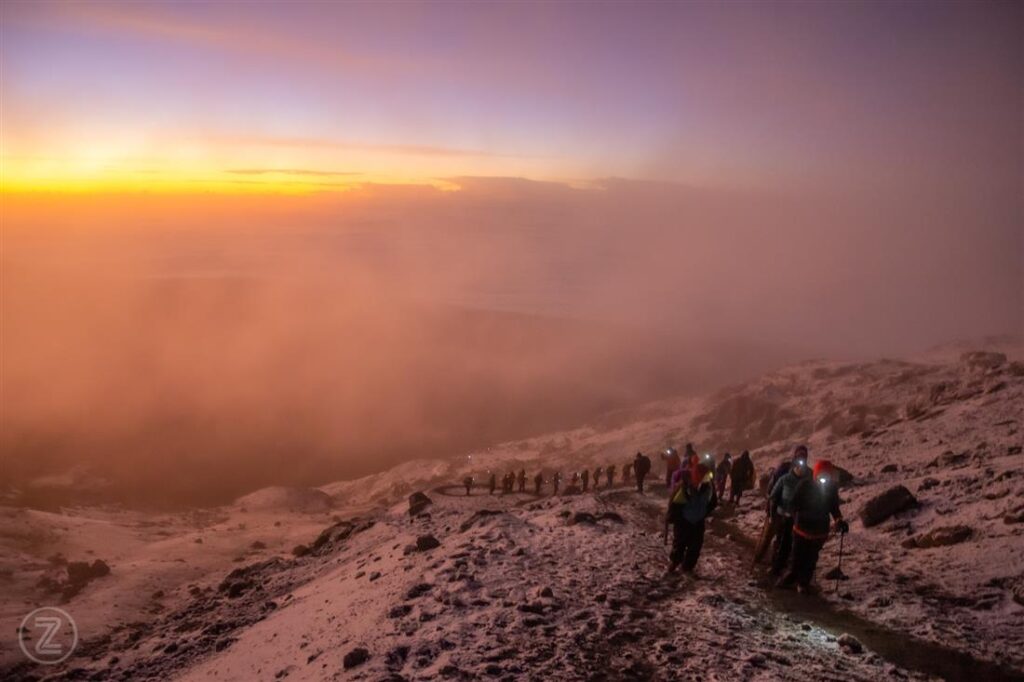
Northern Circuit Route Kilimanjaro: The Ultimate 9-Day Itinerary & Map Guide
Choosing the right path to the Roof of Africa is the single most important decision you will make for your expedition. If you are researching the northern circuit route, you are looking at the mountain’s newest, longest, and most comprehensive trekking path, offering a full 360-degree circumnavigation of the peak.
The short answer is that the northern circuit route kilimanjaro is widely considered the safest and most successful path to the summit. Spanning approximately 53 to 61 miles (88 to 98 km) over a recommended 9 days, this kilimanjaro northern circuit route boasts a staggering 90% to 98% summit success rate. This is due to its superior, gradual “climb high, sleep low” acclimatization profile, which drastically reduces the risk of Acute Mountain Sickness (AMS) while keeping you far away from the crowded southern trails.
This comprehensive guide breaks down the exact mt kilimanjaro northern circuit route day-by-day itinerary, explains how to read a kilimanjaro northern circuit route map, and provides expert tips to ensure your expedition is safe, serene, and successful.
What is the Northern Circuit Route? The northern circuit route is the longest and most comprehensive path on Mount Kilimanjaro, offering a full 360-degree circumnavigation. Spanning 53 to 61 miles over a recommended 9 days, the northern circuit route kilimanjaro boasts a 90% to 98% summit success rate due to its superior “climb high, sleep low” acclimatization profile. Starting at Londorossi Gate and descending via Mweka, it is the least crowded and safest route on the mountain.
Key Route Specifications: Northern Circuit Route Kilimanjaro
Below is the definitive breakdown of the northern circuit route:
Metric | Details & Specifications |
|---|---|
Starting Point | Londorossi Gate (Western base, sharing the initial Lemosho path) |
Total Distance | ~53 to 61 miles (88 to 98 km) round-trip |
Recommended Duration | 9 Days / 8 Nights (8-day options exist, but 9 is the gold standard) |
Summit Success Rate | 90% – 98% (The highest of all Kilimanjaro routes) |
Difficulty Level | Moderate (gradual ascent, no technical climbing, bypasses Barranco Wall) |
Crowd Level | Very Low (The quietest, most remote trail on the mountain) |
Accommodation | Wilderness camping (tents) throughout the trek |
Descent Route | Mweka Route (Southern descent) |
The Standard 9-Day Northern Circuit Itinerary
A detailed, day-by-day breakdown is crucial for understanding the kilimanjaro northern circuit route profile. This 9-day itinerary is specifically designed to maximize your body’s ability to adapt to thinning air while exploring the mountain’s most remote flanks.
Day | Route Segment | Elevation Gain/Loss | Habitat Zone | Key Highlights |
|---|---|---|---|---|
Day 1 | Londorossi Gate to Mti Mkubwa (Big Tree Camp) | 2,360m → 2,800m | Montane Rainforest | Undisturbed forest, potential colobus monkey sightings. |
Day 2 | Mti Mkubwa to Shira 1 Camp | 2,800m → 3,500m | Heath & Moorland | Emerge onto the Shira Ridge with first panoramic views of Kibo. |
Day 3 | Shira 1 Camp to Shira 2 Camp | 3,500m → 3,900m | Moorland | Cross the expansive Shira Plateau; gentle acclimatization. |
Day 4 | Shira 2 Camp to Moir Hut | 3,900m → 4,200m | Alpine Desert | Turn north away from heavy southern traffic; explore remote slopes. |
Day 5 | Moir Hut to Pofu Camp (Buffalo Camp) | 4,200m → 4,050m | Alpine Desert | Traverse the quiet northern slopes with sweeping views of Kenya. |
Day 6 | Pofu Camp to Third Cave | 4,050m → 3,950m | Alpine Desert | Continue the easterly arc below the ice fields, enjoying profound solitude. |
Day 7 | Third Cave to School Hut | 3,950m → 4,800m | Alpine Desert | Reach the high base camp for the summit push; early rest and preparation. |
Day 8 | School Hut to Uhuru Peak, descend to Mweka Camp | 4,800m → 5,895m → 3,100m | Arctic / Rainforest | Midnight summit push via Gilman’s Point, sunrise at Uhuru Peak, long descent. |
Day 9 | Mweka Camp to Mweka Gate, transfer to Moshi/Arusha | 3,100m → 1,640m | Rainforest | Celebrate with summit certificates and return to civilization. |
Understanding the Kilimanjaro Northern Circuit Route Map
When visualizing a kilimanjaro northern circuit route map, it helps to picture a massive clockwise loop around the mountain’s base:
- The Western Approach: You begin at Londorossi Gate, sharing the scenic, forested path of the Lemosho Route for the first three days across the Shira Plateau.
- The Northern Traverse: Instead of turning south toward the crowded Barranco Wall, the northern circuit route swings north past Moir Hut and Pofu Camp. This section is rarely visited, offering untouched alpine desert landscapes and 360-degree views stretching into Kenya’s Amboseli National Park.
- The Eastern Approach: The trail arcs eastward toward Third Cave and School Hut, positioning you perfectly for a summit push from the east via Gilman’s Point.
- The Southern Descent: After summiting, you descend via the southern Mweka Route, exiting through the lush cloud forest at Mweka Gate.
Why Choose the Northern Circuit Route?
- Unmatched Acclimatization: The extended 9-day loop gives your body ample time to adjust to the thin air, drastically reducing the risk of altitude sickness (AMS) and pushing success rates to 98%.
- Remote Wilderness: You experience quieter trails and pristine landscapes that southern routes completely bypass.
- Bypasses the Barranco Wall: Unlike the Machame and Lemosho routes, the mt kilimanjaro northern circuit route avoids the steep, intimidating scramble of the Barranco Wall, making it ideal for those with a fear of heights or bad knees.
- Panoramic Scenery: Because you circle the entire mountain, you get a complete 360-degree perspective of Kilimanjaro’s three volcanic cones (Kibo, Mawenzi, and Shira).
Trade-off: It is generally the most expensive and time-consuming route on the mountain due to the extra days of park fees, crew wages, and provisions. However, for most climbers, the increased success rate and solitude are well worth the investment.
The Critical Role of Expert Guidance
Executing a 9-day high-altitude expedition requires professional oversight. The mountain environment is unpredictable, and proper pacing is the difference between a triumphant summit and a medical evacuation.
For comprehensive pre-trip planning, transparent itinerary comparisons, and help selecting a schedule that matches your fitness level, consulting a trusted Mount Kilimanjaro Guide is the essential first step. They will help you filter out budget operators who cut corners on safety and connect you with reputable teams that prioritize gradual, KPAP-compliant acclimatization.
Furthermore, having an experienced kilimanjaro local guide is the most critical safety investment you can make on the mountain. A top-tier, Wilderness First Responder (WFR) certified guide will intimately monitor your health metrics, enforce the vital “pole pole” (slowly, slowly) pace, and manage your energy output across the grueling daily elevation changes of the Northern Circuit.
(Note: If the 9-day commitment or wilderness camping of the Northern Circuit is not feasible for your schedule, the classic Marangu route offers a shorter, hut-based alternative. However, you must strictly book the 6-day Marangu itinerary to include a vital acclimatization rest day, as its standard 5-day profile has a notoriously high failure rate.)
Frequently Asked Questions (FAQ)
How long is the northern circuit route kilimanjaro?
The northern circuit route kilimanjaro covers approximately 53 to 61 miles (88 to 98 km) round-trip. In terms of time, it is highly recommended to allocate 9 days and 8 nights on the mountain to maximize acclimatization and achieve the route’s signature 90%–98% success rate.
What is the success rate of the northern circuit route?
The summit success rate for the 9-day northern circuit route is approximately 90% to 98%, making it the highest of all routes on Mount Kilimanjaro. This is directly attributed to its gradual elevation gain and excellent “climb high, sleep low” profile.
Is the northern circuit route crowded?
No. The mt kilimanjaro northern circuit route is the least crowded trail on the mountain. Because it requires a longer time commitment and higher cost, it filters out the bulk of the traffic, offering a profound sense of solitude, especially on the remote northern and eastern flanks.
Does the northern circuit route climb the Barranco Wall?
No. One of the major advantages of the kilimanjaro northern circuit route is that it completely bypasses the steep, technical scramble of the Barranco Wall, making it an excellent choice for trekkers with a fear of heights or those wanting to avoid heavy knee strain.
