
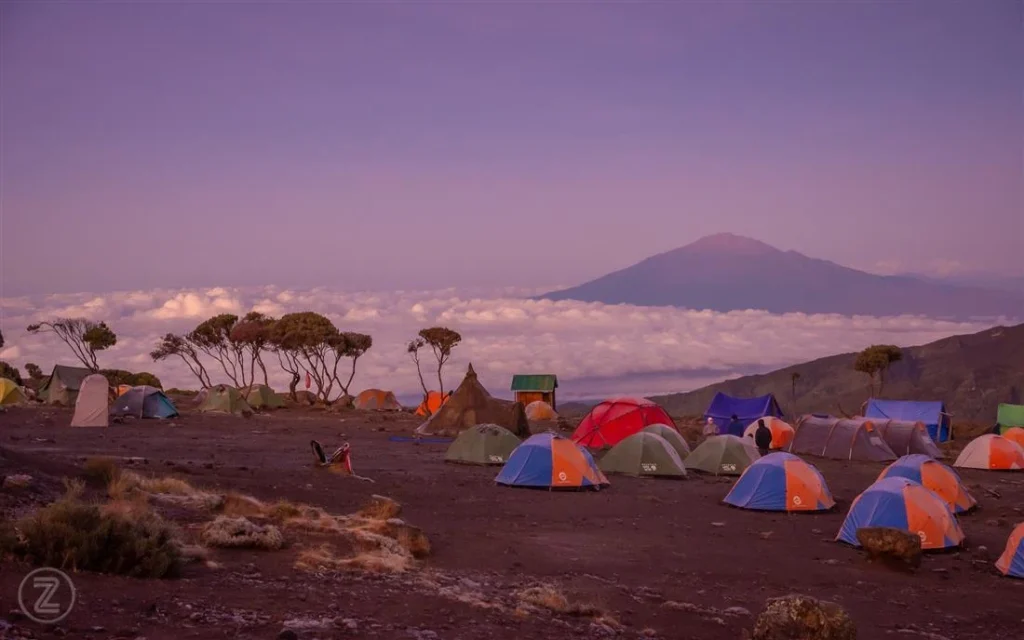
8 Days Lemosho Route: The Ultimate Itinerary, Cost & Success Guide
Booking an expedition to the Roof of Africa requires finding the perfect balance between vacation time, physical challenge, and physiological safety. If you are researching the 8 days Lemosho route, you are looking at what mountaineering experts and seasoned climbers universally consider the absolute “gold standard” for reaching Uhuru Peak safely and successfully.
The short answer is that an 8 day Lemosho route provides the optimal schedule for high-altitude adaptation. By spreading the ascent over 8 days, this itinerary perfectly executes the “climb high, sleep low” principle, yielding an exceptional 90% to 95% summit success rate. It offers unmatched scenic variety, from lush rainforests to the lunar-like alpine desert, while giving your body the crucial extra day needed to adapt to the thinning air.
This comprehensive guide breaks down the exact 8 days Kilimanjaro climb Lemosho route itinerary, details the physiological benefits of the extra day, outlines costs, and provides expert insights to ensure your western-approach expedition is flawlessly planned.
The 8 days Lemosho route is widely considered the best and most scenic itinerary on Mount Kilimanjaro, boasting a 90% to 95% summit success rate. This lemosho route 8 days trek features a gradual western approach, a crucial “climb high, sleep low” acclimatization day at Lava Tower, and an extra rest day at Karanga Camp. Packages typically range from $2,300 to $3,250+ USD per person, covering all park fees, expert guides, and camping logistics.
Why Choose the Lemosho Route 8 Days Itinerary?
When evaluating the lemosho 8 day route, it is vital to understand why this specific timeline dominates online forums and expert recommendations over shorter 6- or 7-day variations:
- The Karanga Camp Advantage: Unlike the 7-day itinerary which forces a long, exhausting push from Barranco to Barafu, the 8 day lemosho route itinerary breaks this into two shorter, manageable days. This preserves vital energy for the grueling midnight summit push.
- Superior Acclimatization: The extra day allows your body crucial time to produce erythropoietin (EPO), stimulating red blood cell production and adapting to the thinning air, drastically reducing the risk of Acute Mountain Sickness (AMS).
- Unmatched Scenery & Solitude: You traverse five distinct ecological zones, starting on the remote western side with minimal crowd overlap in the early days, before merging with the southern circuit for the final ascent.
The Exact 8 Days Lemosho Route Itinerary (Day-by-Day)
Below is the definitive breakdown of the lemosho route 8 days itinerary:
Day | Route Segment | Elevation Profile | Distance / Time | Ecological Zone & Highlights |
|---|---|---|---|---|
Day 1 | Londorossi Gate to Mti Mkubwa | 2,385m → 2,780m (9,120 ft) | 6 km / 3–4 Hrs | Rainforest. Lush canopy, towering trees, and potential Colobus monkey sightings. |
Day 2 | Mti Mkubwa to Shira 1 Camp | 2,780m → 3,500m (11,483 ft) | 8 km / 4–5 Hrs | Moorland. Breaking out of the forest onto the vast, open Shira Plateau. |
Day 3 | Shira 1 to Shira 2 / Moir Hut | 3,500m → 3,900m (12,795 ft) | 8 km / 4–5 Hrs | Alpine Desert. Panoramic vistas of Kibo Peak and Mount Meru. |
Day 4 | Shira 2 to Barranco (via Lava Tower) | 3,900m → 4,600m → 3,950m | 8 km / 5–6 Hrs | High Altitude. Crucial “climb high, sleep low” acclimatization day. |
Day 5 | Barranco Camp to Karanga Camp | 3,950m → 4,050m (13,287 ft) | 5 km / 3–4 Hrs | Alpine Desert. Scramble the iconic Barranco Wall, then rest early in the valley. |
Day 6 | Karanga Camp to Barafu Camp | 4,050m → 4,700m (15,420 ft) | 4 km / 3–4 Hrs | Arctic/Ice Zone. Short, steady push to Base Camp. Early dinner and sleep. |
Day 7 | Barafu to Uhuru Peak to Mweka | 4,700m → 5,895m → 3,090m | 18 km / 11–15 Hrs | Arctic Summit. Midnight push via Stella Point to the roof of Africa, then massive descent. |
Day 8 | Mweka Camp to Mweka Gate | 3,090m → 1,680m (5,511 ft) | 10 km / 3–4 Hrs | Rainforest Descent. Gentle walk to the gate for gold certificates and transfer to Moshi. |
8 Days Lemosho Route Cost & Inclusions
Understanding the financial investment is critical for planning. When searching for an 8 days Kilimanjaro climb Lemosho route itinerary, you will find that costs vary based on the level of service, ethical standards, and group size.
Cost Category | Estimated Range (USD) | What It Covers |
|---|---|---|
Base Package Price | $2,300 – $3,250+ | Varies heavily by operator ethics, group size, and private vs. shared departures. |
Park Fees (Included) | ~$1,100 – $1,300 | Mandatory KINAPA conservation, 7 nights of camping fees, and rescue fees. |
Crew Tips (Excluded) | $250 – $350 | Mandatory gratuities distributed to your guide, cook, and porters on Day 8. |
Travel Insurance (Excluded) | $100 – $350 | Mandatory. Must explicitly cover high-altitude medical evacuation up to 6,000 meters. |
Note: The best seasons to attempt the lemosho route 8 days are during the dry windows: January to March and June to October.
The Critical Role of Expert Guidance
Navigating the physiological demands of an 8-day ascent and managing the logistics of a remote western start requires uncompromising professional oversight.
For comprehensive pre-trip planning, realistic fitness assessments, and transparent operator vetting, consulting a trusted Mount Kilimanjaro Guide is the essential first step. They will help you verify that your chosen company provides high-quality 4-season tents, carries emergency oxygen, and adheres to strict KPAP porter weight limits.
Furthermore, having an experienced kilimanjaro local guide is the most critical safety investment you can make. A top-tier, Wilderness First Responder (WFR) certified guide will monitor your blood oxygen saturation twice daily, guide you safely up the Barranco Wall scramble, enforce the vital “pole-pole” (slowly, slowly) pacing, and make the life-saving call to initiate a descent if severe AMS symptoms appear.
*(Note: While the 8-day Lemosho camping trek offers vastly superior acclimatization and success rates, if you strictly prefer to sleep in permanent wooden huts rather than tents, you would need to look at the southeastern Marangu route. However, for pure physiological adaptation, the 8-day Lemosho remains the undisputed champion).*
Frequently Asked Questions (FAQ)
What is the success rate of the 8 days Lemosho route?
The 8 days Lemosho route boasts an exceptionally high summit success rate of 90% to 95%. This is directly attributed to the extra rest day at Karanga Camp, which allows for superior “climb high, sleep low” acclimatization compared to rushed 6- or 7-day itineraries.
The 8 days Lemosho route boasts an exceptionally high summit success rate of 90% to 95%. This is directly attributed to the extra rest day at Karanga Camp, which allows for superior “climb high, sleep low” acclimatization compared to rushed 6- or 7-day itineraries.
How much does the lemosho route 8 days itinerary cost?
A standard lemosho route 8 days itinerary typically costs between $2,300 and $3,250+ USD per person. This covers park fees, camping accommodations, guide/porter wages, and meals, but excludes international flights, visas, high-altitude travel insurance, and crew tips.
A standard lemosho route 8 days itinerary typically costs between $2,300 and $3,250+ USD per person. This covers park fees, camping accommodations, guide/porter wages, and meals, but excludes international flights, visas, high-altitude travel insurance, and crew tips.
Is 8 days climbing Kilimanjaro via the Lemosho route too long for beginners?
No. In fact, the 8 days Kilimanjaro climb Lemosho route itinerary is highly recommended for beginners. The extended timeline provides the necessary physiological adaptation to make the altitude manageable, drastically reducing the risk of Acute Mountain Sickness (AMS) and increasing overall comfort.
No. In fact, the 8 days Kilimanjaro climb Lemosho route itinerary is highly recommended for beginners. The extended timeline provides the necessary physiological adaptation to make the altitude manageable, drastically reducing the risk of Acute Mountain Sickness (AMS) and increasing overall comfort.
What is the difference between the 7-day and 8 day Lemosho route itinerary?
The primary difference is the stop at Karanga Camp. The 7-day itinerary forces you to hike from Barranco over the wall and all the way to Barafu Basecamp in one exhausting day. The 8 day lemosho route itinerary breaks this into two shorter days, allowing you to rest at Karanga and arrive at Basecamp fresh and energized.
The primary difference is the stop at Karanga Camp. The 7-day itinerary forces you to hike from Barranco over the wall and all the way to Barafu Basecamp in one exhausting day. The 8 day lemosho route itinerary breaks this into two shorter days, allowing you to rest at Karanga and arrive at Basecamp fresh and energized.
