
Is Mount Kilimanjaro an Active Volcano? The Ultimate Geological Guide
Standing as a solitary giant on the East African plains, Mount Kilimanjaro is a geological marvel. If you are researching is Mount Kilimanjaro an active volcano, you are looking for a clear, scientifically backed answer regarding the safety and history of Africa’s highest peak.
The short answer is: No, Mount Kilimanjaro is not an active volcano. It is officially classified as a dormant volcano. While it has not erupted in tens of thousands of years (with its last minor activity estimated between 150,000 and 200,000 years ago), it is not considered entirely “extinct” because its highest peak still emits minor fumaroles (steam and gases) and retains the theoretical potential to erupt again in the distant future. However, scientists consider the immediate risk of an eruption to be virtually zero.
This comprehensive guide breaks down the volcanic status of Kilimanjaro’s three distinct cones, its eruption history, and what this means for climbers planning a safe expedition.
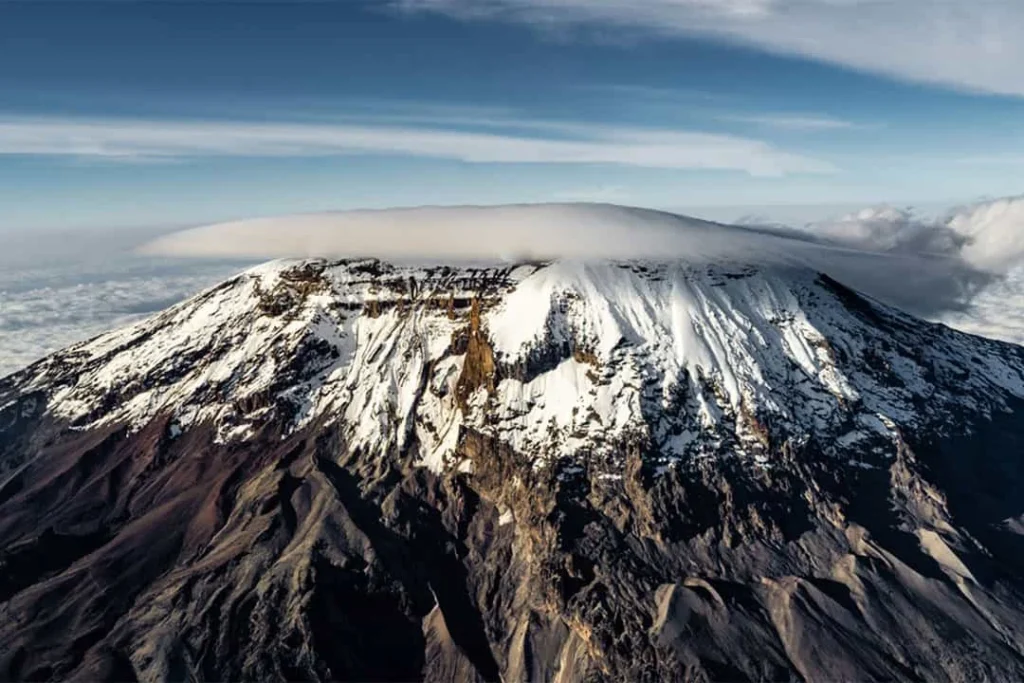
Is Mount Kilimanjaro an active volcano? False. Mount Kilimanjaro is classified as a dormant volcano, not an active one. It consists of three volcanic cones: Shira and Mawenzi, which are completely extinct, and Kibo, the highest cone, which is dormant. Kibo last showed minor activity 150,000 to 200,000 years ago and still emits harmless steam (fumaroles) in its crater, but the immediate risk of eruption is considered extremely low.
The Three Volcanic Cones of Kilimanjaro
To understand the volcano’s status, you must look at its structure. Kilimanjaro is not a single peak, but a massive stratovolcano made up of three distinct cones that formed at different times:
|
Volcanic Cone
|
Elevation
|
Volcanic Status
|
Description
|
|---|---|---|---|
|
Shira
|
3,962 m (12,999 ft)
|
Extinct
|
The oldest cone. It stopped erupting roughly 1 million years ago, collapsed, and eroded into a broad, flat plateau.
|
|
Mawenzi
|
5,149 m (16,893 ft)
|
Extinct
|
The second cone to form. It is heavily eroded, rugged, and shows no signs of future volcanic activity.
|
|
Kibo
|
5,895 m (19,341 ft)
|
Dormant
|
The youngest and tallest cone. It contains Uhuru Peak (the highest mountain in Africa) and still emits minor fumaroles, but has not erupted in over 150,000 years.
|
Mount Kilimanjaro is an Active Volcano: True or False?
False. The statement “Mount Kilimanjaro is an active volcano” is scientifically false.
In volcanology, an active volcano is one that has erupted within the last 10,000 years (the Holocene epoch) and shows signs of potential future eruption. An extinct volcano has not erupted in over 10,000 years and is not expected to ever erupt again. A dormant volcano (“sleeping”) has not erupted in over 10,000 years but retains a magma chamber and the theoretical potential to erupt again. Because Kibo still releases geothermal steam and sits atop a magma system, it is classified as dormant, not active.
Is It Safe to Climb a Dormant Volcano?
Yes, climbing Mount Kilimanjaro is considered very safe from a volcanic perspective. The primary risks on the mountain are related to high altitude (Acute Mountain Sickness), extreme weather, and physical exhaustion, not volcanic activity.
When planning your expedition, understanding the mountain’s geology can actually enhance your experience. For comprehensive pre-trip planning, route selection, and understanding the geological zones you will traverse, consulting a trusted Mount Kilimanjaro Guide is the essential first step. They will help you choose a route that safely navigates these ancient volcanic landscapes.
Furthermore, having an experienced kilimanjaro local guide is the most critical safety investment you can make. They possess deep, generational knowledge of the mountain’s unique terrain, from the rocky scree slopes of the Kibo crater to the ancient lava flows, ensuring your trek is both safe and educational.
(Note: Your route choice determines which geological features you will see. For example, the classic Marangu route takes you directly up the southeastern slopes of the dormant Kibo cone, offering a clear, gradual view of the transition from the lush rainforest zone to the stark, volcanic alpine desert near the summit).
Geographic Context: Where is Kilimanjaro?
If you are looking at Mt Kilimanjaro on a map, you will find it located in northeastern Tanzania, East Africa. It sits approximately 320 kilometers (200 miles) south of the Equator and near the border with Kenya.
To answer how tall is Mount Kilimanjaro in feet, its highest point, Uhuru Peak on the Kibo cone, reaches exactly 19,341 feet (5,895 meters) above sea level. Because it rises roughly 4,900 meters (16,100 feet) directly from the surrounding plains, it holds the title of the tallest free-standing mountain in the world.
Frequently Asked Questions (FAQ)
Is Mount Kilimanjaro an active volcano?
No, Mount Kilimanjaro is not an active volcano. It is classified as a dormant volcano. Its highest cone, Kibo, has not erupted in over 150,000 years, though it still emits minor geothermal steam.
No, Mount Kilimanjaro is not an active volcano. It is classified as a dormant volcano. Its highest cone, Kibo, has not erupted in over 150,000 years, though it still emits minor geothermal steam.
Mount Kilimanjaro is an active volcano: True or False?
False. Mount Kilimanjaro is a dormant stratovolcano, not an active one. The Shira and Mawenzi cones are completely extinct.
False. Mount Kilimanjaro is a dormant stratovolcano, not an active one. The Shira and Mawenzi cones are completely extinct.
When did Mount Kilimanjaro last erupt?
The last significant volcanic activity on Mount Kilimanjaro (specifically on the Kibo cone) is estimated to have occurred between 150,000 and 200,000 years ago.
The last significant volcanic activity on Mount Kilimanjaro (specifically on the Kibo cone) is estimated to have occurred between 150,000 and 200,000 years ago.
Is it dangerous to climb Mount Kilimanjaro because it is a volcano?
No. The volcanic risk is virtually zero. The real dangers of climbing Kilimanjaro are related to high altitude (Acute Mountain Sickness), extreme weather changes, and physical exhaustion, all of which can be safely managed with proper preparation and a reputable guide.
No. The volcanic risk is virtually zero. The real dangers of climbing Kilimanjaro are related to high altitude (Acute Mountain Sickness), extreme weather changes, and physical exhaustion, all of which can be safely managed with proper preparation and a reputable guide.
