
Climbing Mount Kilimanjaro Difficulty: How Hard Is It to Climb Kilimanjaro?
Climbing Mount Kilimanjaro is challenging but achievable for many reasonably fit people without technical mountaineering experience. The biggest challenges are high altitude, long hiking days, steep terrain, cold temperatures, and summit night, rather than technical climbing. At 5,895 m (19,341 ft), Uhuru Peak is high enough that altitude acclimatization is a major factor in how difficult the climb feels.
For most trekkers, route choice, number of days, pacing, acclimatization, fitness, weather, and individual response to altitude have a greater effect on difficulty than raw athletic ability.
How difficult is it to climb Mount Kilimanjaro?
Mount Kilimanjaro is a challenging but non-technical high-altitude trek. The main difficulties are altitude, long hiking days, cold weather and the demanding summit night.
What is the difficulty level of climbing Mount Kilimanjaro?
Kilimanjaro is generally rated moderate to strenuous. Its standard routes do not require technical climbing skills, but reaching 5,895 m makes acclimatization and endurance essential.
Is Mount Kilimanjaro difficult for beginners?
Kilimanjaro can be climbed by beginners who prepare properly. Previous mountaineering experience is usually unnecessary, but good endurance, appropriate training and a suitable acclimatization itinerary are important.
What is the hardest part of Kilimanjaro?
Summit night is usually the hardest part because trekkers climb for several hours in darkness and cold at extreme altitude before descending after reaching Uhuru Peak.
If you’re planning your climb, this guide explains the Mount Kilimanjaro difficulty level, what makes the mountain hard, how difficult each route is, and how to prepare.
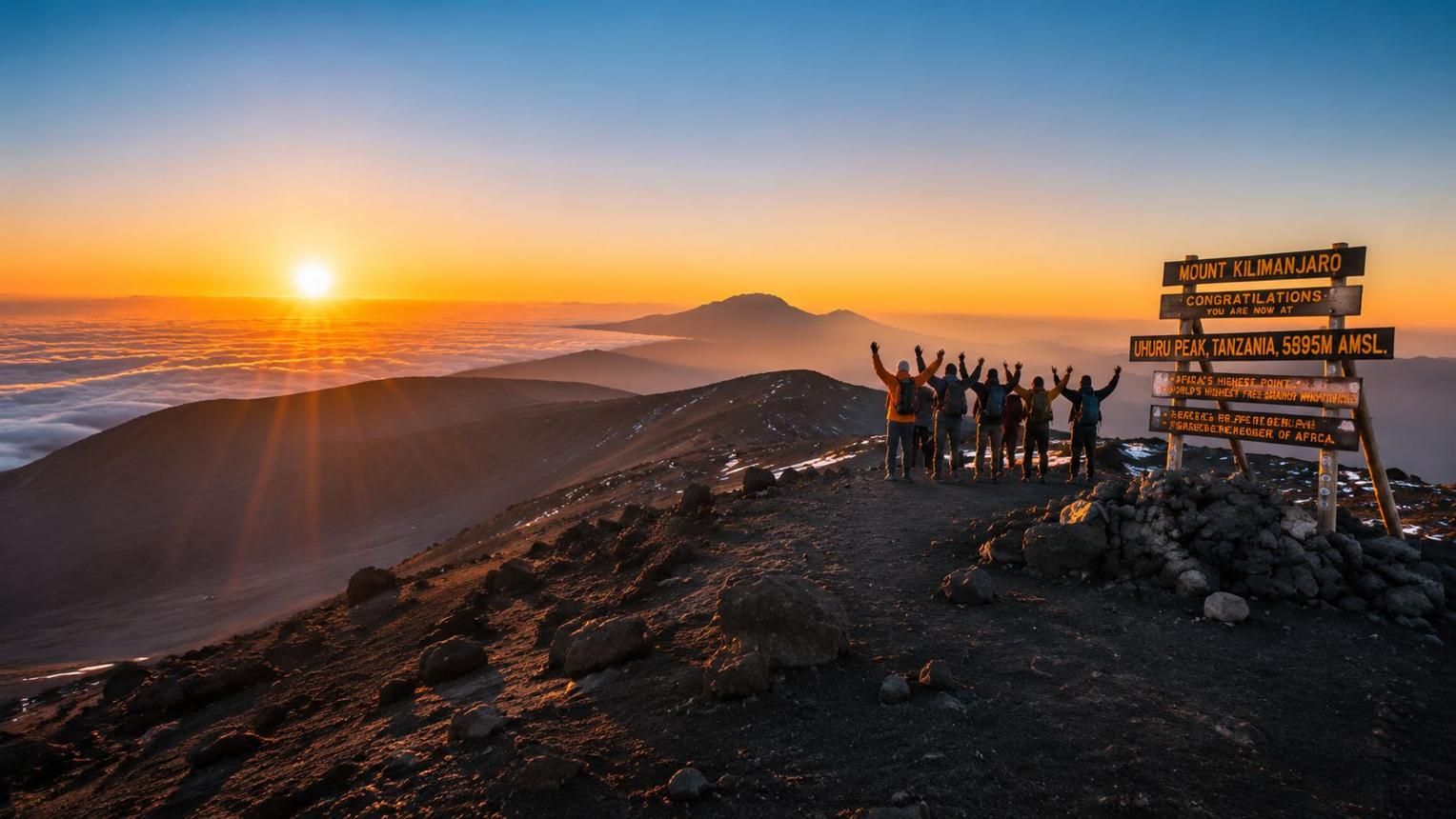
How Difficult Is It to Climb Mount Kilimanjaro?
Mount Kilimanjaro is moderately to very challenging, but it is not a technical climb. You do not normally need ropes, climbing equipment, or previous mountaineering experience. However, the altitude makes Kilimanjaro significantly harder than an ordinary high-altitude hike.
The physical challenge comes from several factors:
- 5,895 m / 19,341 ft maximum elevation
- Several consecutive days of hiking
- Long summit day and night
- Steep sections on some routes
- Low oxygen at high altitude
- Cold and potentially windy summit conditions
- Sleeping at progressively higher elevations
- Variable weather
- Limited recovery between hiking days
The key distinction is that Kilimanjaro is a trekking mountain rather than a technical mountaineering expedition. The walking itself is generally straightforward, but the altitude can make even slow walking surprisingly difficult.
What Is the Difficulty Level of Climbing Mount Kilimanjaro?
The difficulty level of climbing Mount Kilimanjaro is generally considered moderate to strenuous, depending on the route and itinerary. The mountain has no glacier climbing or technical rock-climbing requirement on the standard trekking routes, but altitude and summit night make it a serious physical challenge.
A useful way to think about Kilimanjaro difficulty is:
| Factor | Difficulty |
|---|---|
| Technical climbing | Low |
| Hiking fitness | Moderate–High |
| Altitude | Very High |
| Summit night | Very High |
| Navigation with a guide | Low |
| Long-distance endurance | High |
| Cold exposure | Moderate–High |
| Mental endurance | High |
| Overall challenge | Moderate–Very High |
The most important variable is altitude adaptation. A person who is extremely fit can still experience altitude sickness, while someone with average fitness may successfully summit if they acclimatize well and maintain a slow, steady pace.
Why Is Mount Kilimanjaro Difficult?
1. The Altitude Is the Biggest Challenge
Kilimanjaro rises from lower elevations through several ecological zones before reaching Uhuru Peak at 5,895 m (19,341 ft).
As elevation increases, atmospheric pressure decreases and there is less available oxygen with each breath. This means that normal activities such as walking uphill, eating, sleeping, and even getting dressed can become more demanding.
Altitude-related symptoms can include:
- Headache
- Fatigue
- Dizziness
- Nausea
- Reduced appetite
- Shortness of breath
- Difficulty sleeping
This is why acclimatization is more important than simply being strong or athletic.
2. Summit Night Is Extremely Demanding
The final ascent is usually the hardest part of climbing Kilimanjaro.
Trekkers typically leave camp around midnight or in the early morning and climb through darkness toward Uhuru Peak. The ascent can take several hours, followed by a descent to lower elevation.
Summit night combines:
darkness + cold + altitude + steep terrain + fatigue + a long hiking day.
Even experienced hikers can find this section exhausting.
The goal is not to climb quickly. Guides generally use a deliberately slow pace, often described by the Swahili phrase “pole pole,” meaning “slowly, slowly.”
Is Kilimanjaro Harder Than It Looks?
Yes. Photographs can make Kilimanjaro look like a relatively simple hiking mountain because there are no massive technical cliffs on the normal routes.
But the altitude changes the experience completely.
At lower elevations, you may comfortably walk several kilometres. Near the summit, the same pace can feel dramatically harder because your body is working in a low-oxygen environment.
This is why Kilimanjaro difficulty should not be judged only by:
- Distance
- Elevation gain
- Trail steepness
- Your normal hiking ability
Altitude is the variable that makes Kilimanjaro different from an ordinary mountain hike.
How Fit Do You Need to Be to Climb Mount Kilimanjaro?
You do not need to be an elite athlete to climb Kilimanjaro.
A good candidate should be capable of walking for several hours at a steady pace on consecutive days, including uphill and downhill terrain.
Useful fitness characteristics include:
- Good cardiovascular endurance
- Strong legs
- Strong glutes
- Good walking endurance
- Ability to hike uphill continuously
- Ability to recover between hiking days
- Comfort walking for long periods
You should train for endurance rather than maximum strength.
A practical fitness benchmark
Before your trek, you should be comfortable completing long walks or hikes while carrying a daypack and still having enough energy to continue the following day.
Training should progressively increase:
walking duration → elevation gain → consecutive hiking days → pack weight.
Does Kilimanjaro Require Technical Climbing?
No. Standard Kilimanjaro trekking routes do not require technical mountaineering skills.
You generally do not need:
- Ice axes
- Crampons for standard trekking conditions
- Ropes
- Rock-climbing skills
- Previous mountaineering experience
However, some sections can be steep and exposed enough to require careful foot placement.
The Western Breach is a different proposition and should not be treated like an ordinary trekking route. Anyone considering more technical or demanding approaches should obtain specialist guidance and current route information.
Mount Kilimanjaro Difficulty by Route
Route selection can significantly affect how difficult your Kilimanjaro climb feels.
Machame Route Difficulty
Machame is a moderately difficult to challenging route because of its steep sections, longer hiking days, and varied terrain.
Its major advantage is its itinerary and opportunities for acclimatization when completed over an appropriate number of days.
Machame is sometimes called the “Whiskey Route,” while Marangu is traditionally associated with the “Coca-Cola Route.”
Lemosho Route Difficulty
Lemosho is challenging but offers a strong acclimatization profile when taken over a longer itinerary.
The route begins on the western side of Kilimanjaro and provides a gradual approach before joining the southern circuit.
For many trekkers, a longer Lemosho itinerary can make the overall experience more manageable because the body has more time to adapt to increasing altitude.
Marangu Route Difficulty
Marangu is often perceived as easier because the trail is relatively direct and accommodation is provided in mountain huts, but the route can still be physically demanding and altitude remains the major challenge.
One important consideration is that Marangu generally uses the same ascent and descent corridor, giving less opportunity for the varied acclimatization profile found on some other routes.
Rongai Route Difficulty
Rongai is generally considered a moderate-to-challenging trekking route and is known for approaching Kilimanjaro from the northern side.
It can be an attractive option for trekkers who prefer a quieter approach and different scenery.
Northern Circuit Difficulty
The Northern Circuit is physically demanding because of its length, but its longer itinerary provides excellent opportunities for acclimatization.
For trekkers who have sufficient time, the longer itinerary can be an important advantage.
Kilimanjaro Route Difficulty Comparison
| Route | General difficulty | Main consideration |
|---|---|---|
| Lemosho | Moderate–Challenging | Longer itinerary and strong acclimatization potential |
| Machame | Challenging | Steeper sections and popular trail |
| Marangu | Moderate–Challenging | Huts but direct ascent profile |
| Rongai | Moderate–Challenging | Northern approach |
| Northern Circuit | Challenging | Longest route with excellent acclimatization potential |
Important: There is no universally “easy” route to 5,895 m. A longer itinerary can be physically demanding while simultaneously being a better strategy for altitude acclimatization.
How Long Does It Take to Climb Mount Kilimanjaro?
Most Kilimanjaro climbs take approximately 5–9 days on the mountain, depending on the route and itinerary. Longer itineraries generally provide more time for acclimatization.
A common strategic principle is:
More time on the mountain generally means more opportunity to acclimatize.
Trying to minimize the number of days can make the climb harder because your body has less time to adjust to increasing elevation.
For a detailed planning page, see our guide to how many days to climb Kilimanjaro.
Is Kilimanjaro Harder Than Everest Base Camp?
This depends on the person and the itinerary.
Kilimanjaro reaches a higher elevation than Everest Base Camp, but the trekking experiences are different.
Kilimanjaro involves a concentrated ascent to 5,895 m, including a demanding summit night. Everest Base Camp trekking generally involves a longer journey with repeated acclimatization periods.
Therefore, neither trek should simply be labeled “harder” based on elevation alone.
A better comparison considers:
- Maximum altitude
- Number of trekking days
- Elevation gain per day
- Acclimatization schedule
- Distance
- Terrain
- Summit requirements
- Weather
- Individual response to altitude
What Is the Hardest Part of Climbing Kilimanjaro?
For most trekkers, the hardest part is summit night.
The final ascent combines:
- High altitude
- Cold temperatures
- Darkness
- Steep terrain
- Physical fatigue
- Several hours of continuous hiking
- A long descent afterward
Many trekkers reach Uhuru Peak after several hours of slow climbing and then descend to a lower camp.
This makes the summit day one of the most physically and mentally demanding days of the entire trek.
What Temperature Should You Expect at the Kilimanjaro Summit?
Temperatures around the summit can fall well below freezing, particularly during the early morning summit attempt.
Wind can make conditions feel substantially colder.
Your summit clothing system should therefore include:
- Thermal base layers
- Insulating mid-layer
- Warm down or synthetic jacket
- Waterproof/windproof outer shell
- Warm gloves or mitts
- Warm hat
- Proper hiking trousers
- Warm socks
- Appropriate footwear
Cold management becomes increasingly important because you may spend hours moving slowly near the summit.
Can Beginners Climb Mount Kilimanjaro?
Yes, beginners can climb Mount Kilimanjaro, provided they are adequately prepared and use a suitable itinerary.
Previous mountain-climbing experience is not normally required.
However, “beginner-friendly” does not mean “easy.”
A first-time mountain trekker should take preparation seriously, especially:
- Aerobic conditioning
- Long-distance walking
- Hill training
- Strength training
- Gear preparation
- Acclimatization strategy
- Pacing
- Hydration
- Nutrition
- Understanding altitude symptoms
A longer itinerary is often worth considering for a first Kilimanjaro climb.
How to Train for Kilimanjaro Difficulty
A good Kilimanjaro training program should focus on endurance, uphill fitness and hiking-specific strength.
Cardio
Aim to build a strong aerobic base with activities such as:
- Hiking
- Brisk walking
- Stair climbing
- Incline treadmill
- Cycling
- Jogging, if appropriate for you
Strength
Prioritize:
- Squats
- Lunges
- Step-ups
- Calf raises
- Glute exercises
- Core exercises
Hiking
Hiking is particularly valuable because it teaches your body to handle the movement pattern you’ll use on Kilimanjaro.
Progressively introduce:
- Longer hikes
- Steeper hills
- Consecutive hiking days
- A loaded daypack
The goal is not to become a bodybuilder. The goal is to become an efficient endurance hiker.
How to Make Climbing Kilimanjaro Easier
There is no way to make a 5,895 m mountain completely easy, but several decisions can substantially improve the experience.
1. Choose a Longer Itinerary
More days generally provide more opportunities for acclimatization.
2. Walk Slowly
Pole pole is one of the most important principles on Kilimanjaro.
A slow pace helps conserve energy and can make the long hiking days more manageable.
3. Start Training Early
Give yourself enough time to build endurance gradually rather than attempting to become fit immediately before departure.
4. Use Appropriate Gear
Cold, rain, poor footwear, or an uncomfortable backpack can make an already challenging trek substantially harder.
5. Listen to Your Mountain Guide
Your guide and mountain crew have experience monitoring trekkers and managing the pace and itinerary.
6. Take Altitude Seriously
Fitness does not prevent altitude illness. If you develop concerning symptoms, communicate them to your guide immediately.
Can You Climb Kilimanjaro Without Training?
It is possible for some people to complete Kilimanjaro without a formal training program, but deliberately preparing beforehand is strongly recommended.
Kilimanjaro is not a technical climb, but it requires sustained physical effort over multiple days.
Training improves your ability to:
- Walk longer
- Climb uphill
- Recover between stages
- Carry your daypack
- Handle summit night
- Enjoy the experience rather than simply endure it
The fitter you are aerobically and muscularly, the easier the physical component is likely to feel—but fitness does not eliminate altitude risk.
Is Kilimanjaro Dangerous?
Kilimanjaro is a serious high-altitude mountain, even though it does not require technical climbing on the normal trekking routes.
The principal medical concern is altitude illness.
Do not ignore symptoms or attempt to push through severe or worsening symptoms simply to reach the summit.
A responsible operator should prioritize health and safety over summit success.
What Makes Kilimanjaro Different From a Normal Hike?
The biggest difference is rapid elevation gain over a relatively short period.
A normal hiking trip might involve walking for several hours at elevations where oxygen availability is relatively normal.
On Kilimanjaro, your itinerary takes you progressively higher until you reach nearly 5,900 metres above sea level.
That creates an unusual situation:
The trail can be technically simple while the climb is physically demanding.
This is one of the most important concepts to understand when researching Mount Kilimanjaro difficulty.
Mount Kilimanjaro Difficulty: Quick Answer
Is climbing Mount Kilimanjaro difficult?
Yes. Kilimanjaro is a challenging high-altitude trek, but it is achievable for many reasonably fit people without technical climbing experience. The biggest challenges are altitude, long hiking days, cold temperatures, and summit night.
What is the difficulty level of climbing Mount Kilimanjaro?
Kilimanjaro is generally moderate to strenuous, depending on the route, itinerary, fitness, weather, and individual response to altitude.
Do you need climbing experience?
No. Standard Kilimanjaro routes are trekking routes and normally do not require technical mountaineering experience.
What is the hardest part?
Summit night is usually the hardest section because it combines high altitude, cold, darkness, steep terrain and fatigue.
Is Kilimanjaro suitable for beginners?
Yes. Beginners can climb Kilimanjaro with appropriate preparation, a sensible itinerary, proper equipment and professional guiding.
Frequently Asked Questions About Mount Kilimanjaro Difficulty
How hard is it to climb Mount Kilimanjaro?
Mount Kilimanjaro is challenging primarily because of its altitude and the length of the trek. The standard routes do not normally require technical climbing, but reaching 5,895 m requires endurance and careful acclimatization.
How difficult is Kilimanjaro compared with other mountains?
Kilimanjaro is technically easier than many high mountains because standard routes do not require advanced climbing skills. However, its high altitude and summit night make it substantially more demanding than a typical hiking holiday.
Can an unfit person climb Kilimanjaro?
It is not advisable to attempt Kilimanjaro without adequate physical preparation. You should be capable of sustained walking and uphill hiking before starting the trek.
What is the easiest Kilimanjaro route?
There is no genuinely easy route to Uhuru Peak. Route difficulty depends on terrain, duration and acclimatization profile. A longer itinerary can be a better choice than simply selecting a route because it appears shorter or easier.
Is Kilimanjaro harder than hiking?
Yes. Kilimanjaro is significantly more demanding than an ordinary day hike because you spend multiple days trekking and eventually ascend to 5,895 m.
Can you climb Kilimanjaro without experience?
Yes. Previous mountaineering experience is generally unnecessary on standard routes. Preparation, pacing, acclimatization and professional guiding are more important.
Kilimanjaro Difficulty: The Bottom Line
Mount Kilimanjaro is not technically difficult, but it is physically and physiologically demanding. The mountain’s 5,895 m elevation, long trekking days, cold conditions and difficult summit night make it a serious challenge.
The best strategy is not simply to become as strong as possible. Instead:
Choose a sensible route + allow enough acclimatization time + train for endurance + hike slowly + use appropriate gear + listen to your guide.
If you want to understand the mountain, routes, preparation and logistics before booking, explore the Mount Kilimanjaro Guide and connect with a kilimanjaro local guide and kilimanjaro tour operator.
