
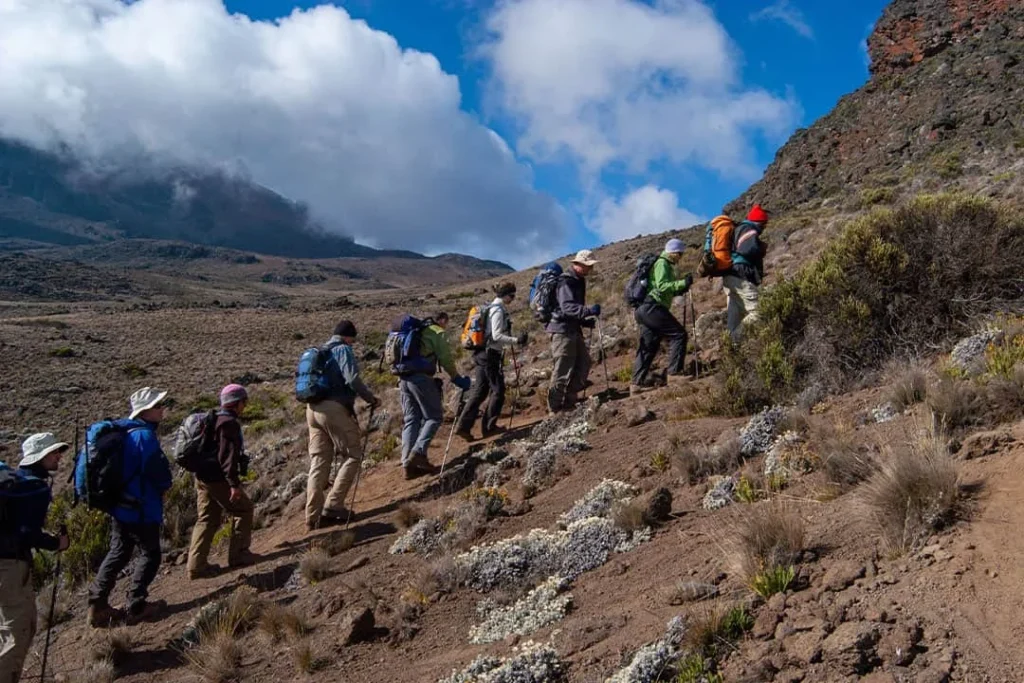
Machame Route Success Rate: The Ultimate Statistics & Strategy Guide
Reaching the Roof of Africa is the ultimate goal, but not all pacing strategies offer the same probability of getting you there. If you are researching the machame route success rate, you need objective, data-driven insights into how itinerary length directly impacts your chances of standing at 5,895 meters.
The short answer is that the machame route success rate depends heavily on the duration of your trek. For a 7-day itinerary, the average success rate is 85% to 90% (with top-tier operators reporting up to 95%). However, if the trek is compressed into a 6 day machame route success rate drops significantly to 73% to 75% due to the higher risk of altitude sickness from a faster ascent.
This comprehensive guide breaks down the exact machame route kilimanjaro success rate statistics by duration, the physiological science behind the “climb high, sleep low” profile, and expert strategies to ensure you are part of the majority who reach Uhuru Peak .
What is the Machame route success rate? The machame route success rate is 85% to 90% for a 7-day itinerary, but drops to 73% to 75% for a 6 day machame route success rate. The 7-day option is highly recommended because the extra day allows for a crucial “climb high, sleep low” acclimatization profile (ascending to Lava Tower, then sleeping lower at Barranco Camp), drastically reducing the risk of altitude sickness.
Machame Route Success Rate by Itinerary Length
Below is the definitive breakdown of the machame route success rate based on historical data and modern operator averages:
Itinerary Duration | Average Success Rate | Physiological Reality & Risk Level |
|---|---|---|
7-Day Machame | 85% – 90% (Up to 95% with premium operators) | Optimal. Provides ample time for the “climb high, sleep low” acclimatization cycle, allowing the body to adjust to thinning oxygen levels. |
6-Day Machame | 73% – 75% | High Risk. The shorter timeframe allows less time for proper altitude acclimatization, significantly increasing the likelihood of Acute Mountain Sickness (AMS). |
Why Duration Matters: The Science of the Machame Route
The Machame Route (nicknamed the “Whiskey Route”) is famous for its excellent topographic profile. However, this profile only works if you give your body enough time to use it.
On Day 3 of the standard itinerary, climbers ascend to Lava Tower (4,630m) for lunch before descending to sleep at Barranco Camp (3,900m). This is the classic “climb high, sleep low” principle. Exposing your body to extreme altitude during the day stimulates red blood cell production, while sleeping at a lower elevation allows your body to recover in thicker air without over-stressing your system overnight.
Choosing the 7-day option ensures this critical physiological adaptation occurs naturally. Rushing this process in 6 days forces the body to adapt too quickly, which is the primary reason the 6-day machame route success rate is notably lower.
6-Day vs. 7-Day Machame Route: The Real Risk
When evaluating the 6day machame route success rate, it is critical to understand the real-world implications of saving one day.
While opinions on platforms like Reddit are sometimes mixed—with some highly fit or experienced climbers managing the 6-day schedule well—the overwhelming consensus among mountaineering medical professionals is that the rapid ascent increases the risk of altitude sickness. The 6-day itinerary typically combines the trek from Barranco Camp directly to Barafu Camp, skipping the vital overnight stop at Karanga Camp. This eliminates a crucial buffer for your body to adapt, making the 7-day itinerary the undisputed gold standard for safety and summit probability.
How to Maximize Your Machame Route Success Rate
To ensure you fall into the 85%+ success bracket, follow these expert-backed protocols:
- Choose the 7-Day Itinerary: If your schedule and budget allow, the extra day is the single most effective investment you can make for your summit bid.
- Hydrate Relentlessly: Drink 3 to 4 liters of water daily. Proper hydration maintains blood volume, making it easier for your heart to pump oxygen to your tissues at high altitudes.
- Pace Yourself: Resist the urge to hike fast in the lower, easier sections. Conserving glycogen stores and keeping your heart rate low is crucial for the grueling midnight summit push.
- Communicate with Your Guide: Be brutally honest about any symptoms of altitude sickness (headache, nausea, dizziness). Early detection allows for simple interventions before they become emergencies.
The Critical Role of Expert Guidance
Maximizing your machame route kilimanjaro success rate requires more than just physical fitness; it requires professional, safety-first logistics. Choosing an operator based solely on the lowest price often leads to rushed itineraries and guides who lack the medical training to recognize early signs of altitude sickness.
For comprehensive pre-trip planning, realistic fitness assessments, and help selecting an itinerary that prioritizes your physiological adaptation, consulting a trusted Mount Kilimanjaro Guide is the essential first step. They will help you filter out budget operators who push dangerous, fast-track schedules and connect you with reputable, KPAP-compliant teams equipped with emergency oxygen and pulse oximeters.
Furthermore, having an experienced kilimanjaro local guide is the most critical safety investment you can make on the mountain. A top-tier, Wilderness First Responder (WFR) certified guide will intimately monitor your blood oxygen saturation (SpO2) twice daily, enforce the vital “pole pole” (slowly, slowly) pace, and make the difficult, life-saving call to turn a struggling climber around if their body is not adapting.
(Note: If you are considering alternatives, be aware that the classic Marangu route is often mistakenly marketed as the “easiest” due to its hut accommodations. However, its standard 5-day itinerary features a rapid ascent profile with no dedicated acclimatization day, resulting in a significantly lower success rate compared to the gradual, 7-day Machame approach.)
Frequently Asked Questions (FAQ)
What is the machame route success rate for 7 days?
The machame route success rate for a 7-day itinerary averages 85% to 90%, with specialized, well-guided operators reporting success rates up to 95% due to optimal acclimatization pacing.
The machame route success rate for a 7-day itinerary averages 85% to 90%, with specialized, well-guided operators reporting success rates up to 95% due to optimal acclimatization pacing.
Why is the 6 day machame route success rate lower?
The 6 day machame route success rate drops to 73%–75% because the shorter timeframe eliminates the overnight stop at Karanga Camp. This rapid ascent gives the body less time to produce the red blood cells needed to carry oxygen, drastically increasing the risk of Acute Mountain Sickness (AMS).
The 6 day machame route success rate drops to 73%–75% because the shorter timeframe eliminates the overnight stop at Karanga Camp. This rapid ascent gives the body less time to produce the red blood cells needed to carry oxygen, drastically increasing the risk of Acute Mountain Sickness (AMS).
Does the Machame route have a better success rate than other routes?
When done over 7 days, the machame route kilimanjaro success rate is among the highest on the mountain, rivaling the Lemosho route. Its “climb high, sleep low” profile at Lava Tower is highly effective for physiological adaptation.
When done over 7 days, the machame route kilimanjaro success rate is among the highest on the mountain, rivaling the Lemosho route. Its “climb high, sleep low” profile at Lava Tower is highly effective for physiological adaptation.
How can I improve my personal success rate on the Machame Route?
To maximize your chances, choose the 7-day itinerary, stay highly hydrated (3-4 liters daily), eat frequent carbohydrate-rich meals, strictly adhere to the “pole pole” walking pace, and choose a KPAP-compliant operator with WFR-certified guides who monitor your SpO2 levels daily.
To maximize your chances, choose the 7-day itinerary, stay highly hydrated (3-4 liters daily), eat frequent carbohydrate-rich meals, strictly adhere to the “pole pole” walking pace, and choose a KPAP-compliant operator with WFR-certified guides who monitor your SpO2 levels daily.
