
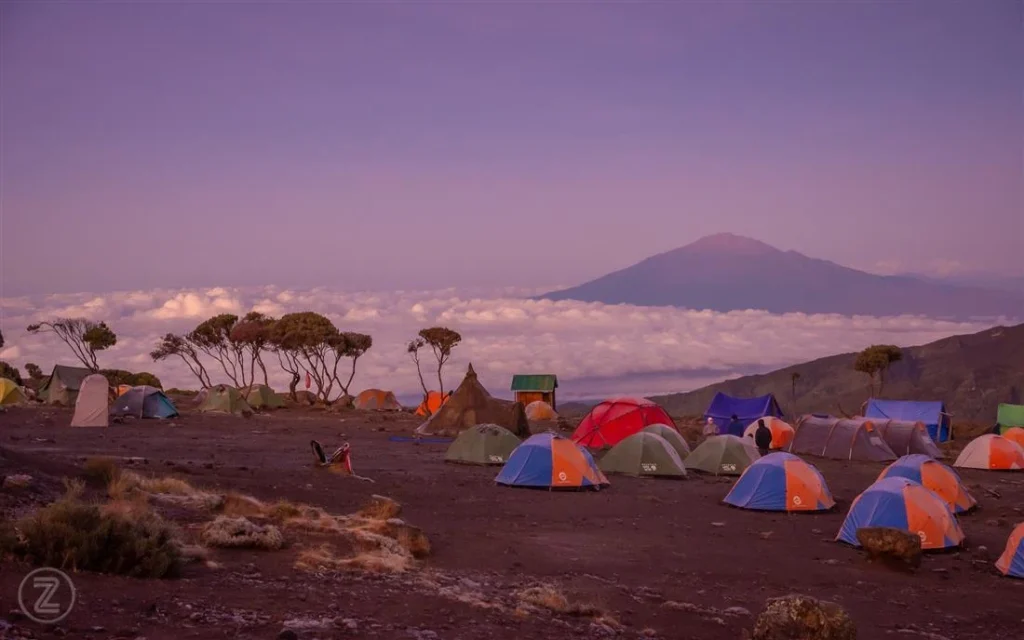
6 Days Lemosho Route: The Ultimate Itinerary, Difficulty & Safety Guide
Booking an expedition to the Roof of Africa requires balancing your vacation time with the strict physiological demands of high altitude. If you are researching the 6 days Lemosho route, you are likely drawn to the trail’s stunning western approach, remote rainforests, and high scenic value, but are constrained by a tighter travel schedule.
The short answer is that the 6 day Lemosho route is a highly compressed, physically demanding trek. While it covers the same spectacular ground as the standard 7- or 8-day itineraries, the accelerated pace significantly reduces your acclimatization time. This rapid elevation gain sharply increases the risk of Acute Mountain Sickness (AMS) and results in a noticeably lower summit success rate.
This comprehensive guide breaks down the exact kilimanjaro lemosho route 6 days itinerary, transparently outlines the physiological risks, details the costs, and explains why upgrading to a longer trek is the smartest decision you can make for your safety and success.
The 6 days Lemosho route is a highly compressed, physically demanding trek on Mount Kilimanjaro’s western approach. While it features stunning scenery, the rapid elevation gain significantly increases the risk of altitude sickness. Experts strongly recommend extending to a 7- or 8-day itinerary for safer acclimatization and a higher summit success rate.
The Reality of the 6 Day Lemosho Route: Difficulty & Risks
When evaluating a lemosho route 6 days trek, it is vital to separate the physical beauty of the trail from the physiological toll it takes on your body.
- The Scenic Advantage: The Lemosho trail is widely considered the most beautiful path on the mountain, starting in the remote west, crossing the vast Shira Plateau, and offering incredible views of Kibo and Mount Meru.
- The Physiological Deficit: A standard Lemosho trek takes 7 to 8 days. Compressing this into a 6 day lemosho route forces your body to ascend rapidly, skipping vital “climb high, sleep low” acclimatization stages (such as an extra night at Karanga Camp).
- The Success Rate Drop: Because of this accelerated schedule, the summit success rate for the 6-day version drops significantly compared to the 8-day version (which boasts a 95% success rate). Summit night on a 6-day itinerary often involves 19 to 24 hours of total walking combined with minimal sleep, leading to extreme physical and mental fatigue.
6 Days Lemosho Route Itinerary (Day-by-Day Breakdown)
Below is the definitive breakdown of the kilimanjaro lemosho route 6 days schedule. (Note: If you are looking for a lemosho route 6 days map, this itinerary follows the western approach, merging with the southern circuit at Barranco).
|
Day
|
Route Segment
|
Elevation Profile
|
Hiking Time
|
Ecological Zone & Highlights
|
|---|---|---|---|---|
|
Day 1
|
Londorossi Gate to Mti Mkubwa Camp
|
2,100m → 2,895m
|
3–4 Hours
|
Montane Rainforest. Lush canopy, potential wildlife sightings.
|
|
Day 2
|
Mti Mkubwa to Shira Camp
|
2,895m → 3,505m
|
5–6 Hours
|
Heath & Moorland. Steep ascent out of the forest onto the Shira Plateau.
|
|
Day 3
|
Shira Camp to Barranco Camp (via Lava Tower)
|
3,505m → 4,630m → 3,960m
|
6–7 Hours
|
Alpine Desert. Crucial acclimatization hike to Lava Tower, then steep descent to Barranco.
|
|
Day 4
|
Barranco Camp to Barafu Camp
|
3,960m → 4,673m
|
7–8 Hours
|
Alpine Desert. Scramble the Barranco Wall, push past Karanga directly to basecamp.
|
|
Day 5
|
Barafu Camp to Uhuru Peak to Mweka Camp
|
4,673m → 5,895m → 3,068m
|
12–15 Hours
|
Arctic Summit. Midnight start, grueling scree ascent, summit, and massive descent.
|
|
Day 6
|
Mweka Camp to Mweka Gate
|
3,068m → 1,640m
|
4–5 Hours
|
Rainforest Descent. Final drop, certificate ceremony, transfer to Moshi.
|
6 Days Lemosho Route Cost & Inclusions
Because the 6 day lemosho route requires one less day of crew wages, park camping fees, and food, it is slightly cheaper than the standard 8-day trek.
|
Cost Category
|
Estimated Range (USD)
|
What It Covers
|
|---|---|---|
|
Base Package Price
|
$1,672 – $1,931+
|
Varies by operator ethics, group size, and private vs. shared departures.
|
|
Park Fees (Included)
|
~$900 – $1,100
|
Mandatory KINAPA conservation, 5 nights of camping fees, and rescue fees.
|
|
Crew Tips (Excluded)
|
$250 – $350
|
Mandatory gratuities distributed to your guide, cook, and porters.
|
|
Travel Insurance (Excluded)
|
$100 – $350
|
Mandatory. Must cover high-altitude medical evacuation up to 6,000 meters.
|
Why Experts Recommend 7 or 8 Days Instead
If your schedule allows, upgrading your lemosho route 6 days trek to a 7- or 8-day itinerary is the single best investment you can make.
By adding just one or two extra days, you break up the grueling Day 4 (Barranco to Barafu) by sleeping at Karanga Camp, and you allow your body an extra 24 to 48 hours to produce erythropoietin (EPO), stimulating red blood cell production. This “climb high, sleep low” protocol drastically reduces AMS symptoms and pushes the Lemosho success rate above 90%.
If you are strictly limited on time and prefer to avoid camping tents altogether, you might consider the hut-based Marangu route. However, even on Marangu, you must book the 6-day version (which includes a rest day at Horombo Hut) rather than the dangerous 5-day version to ensure proper acclimatization.
The Critical Role of Expert Guidance
Navigating the severe physiological risks of a compressed 6-day ascent requires uncompromising professional oversight. You cannot “tough out” severe hypoxia or a 15-hour summit-and-descent day.
For comprehensive pre-trip planning, realistic fitness assessments, and transparent operator vetting, consulting a trusted Mount Kilimanjaro Guide is the essential first step. They will help you understand why ethical operators often discourage the 6-day Lemosho itinerary and will guide you toward safer, higher-success alternatives that fit your schedule.
Furthermore, having an experienced kilimanjaro local guide is the most critical safety investment you can make. A top-tier, Wilderness First Responder (WFR) certified guide will monitor your blood oxygen saturation twice daily, manage your hydration, enforce the vital “pole-pole” (slowly, slowly) pacing, and make the life-saving call to initiate a descent if severe AMS symptoms appear during your rapid ascent.
Frequently Asked Questions (FAQ)
Is the 6 days Lemosho route too hard for beginners?
Yes, the 6 days Lemosho route is generally considered too physically and physiologically demanding for beginners. The compressed timeline leaves very little room for altitude adaptation, making summit night an exhausting 19-to-24-hour endurance test. Beginners should opt for the 7- or 8-day Lemosho itinerary.
How much does a 6 day Lemosho route cost?
A 6 day lemosho route trek typically costs between $1,672 and $1,931+ USD per person. This includes park fees, camping accommodations, guide/porter wages, and meals, but excludes flights, visas, high-altitude travel insurance, and crew tips.
What is the difference between the 6 day and 8 day Lemosho route?
The primary difference is acclimatization. The kilimanjaro lemosho route 6 days itinerary skips the overnight stay at Karanga Camp, forcing a very long, exhausting push from Barranco directly to Barafu basecamp. The 8-day version includes this rest day, drastically reducing fatigue and altitude sickness risks.
Can I find a reliable Lemosho route 6 days map?
Yes, a standard lemosho route 6 days map will show the trail starting at Londorossi Gate in the west, crossing the Shira Plateau, merging with the Machame route at Barranco, summiting via Stella Point, and descending via the Mweka Gate in the south.
