
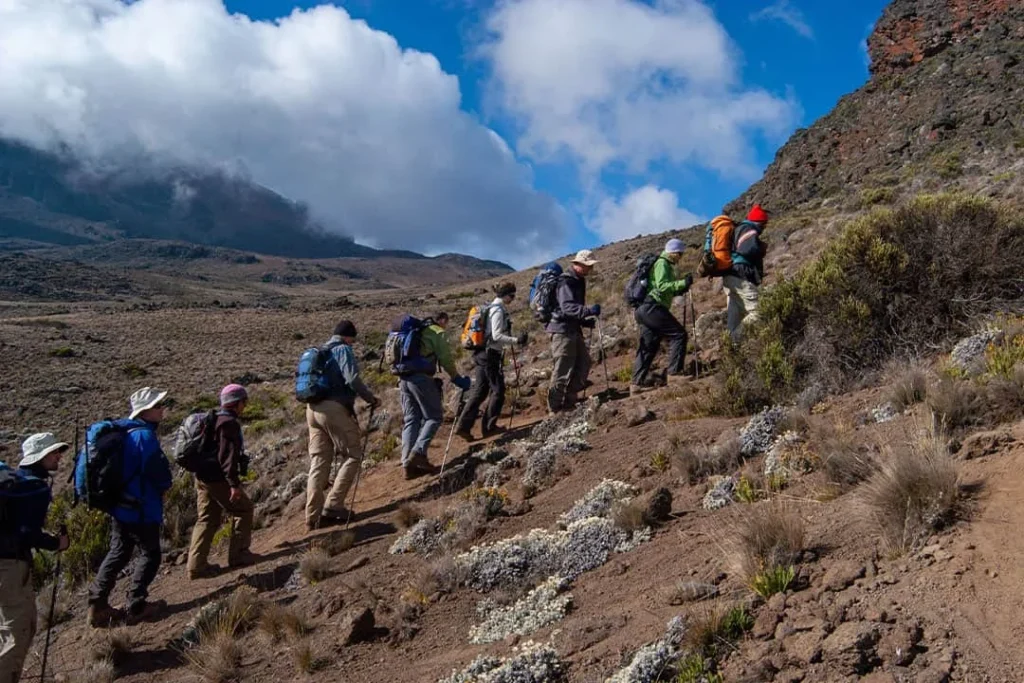
Kilimanjaro Machame Route Difficulty: The Ultimate Guide
Planning an expedition to the Roof of Africa requires an honest assessment of your physical and mental readiness. If you are researching the kilimanjaro machame route difficulty, you need precise, data-driven insights into what the trail actually demands of your body.
The short answer is that the Machame Route (widely known as the “Whiskey Route”) is considered moderate to challenging. While it requires a good level of cardiovascular fitness and mental endurance, it does not require technical mountaineering skills, ropes, or ice axes. The true difficulty lies in the cumulative elevation gain (roughly 61 to 62.8 km / 37 to 38 miles gate-to-gate), the steep scramble of the Barranco Wall, and the physiological challenge of altitude sickness at 5,895 meters (19,341 feet).
This comprehensive guide breaks down the exact daily exertion, the reality of the 6-day vs. 7-day itineraries, and expert tips to conquer the kilimanjaro machame route difficulty on your expedition.
How hard is the Kilimanjaro Machame route? The kilimanjaro machame route difficulty is rated moderate to challenging. It requires no technical climbing skills, but demands 6 to 8 hours of daily hiking, a non-technical scramble up the Barranco Wall, and a grueling 12-to-15-hour summit night. The primary challenge is altitude, not fitness. Choosing the 7-day itinerary over the 6-day version increases the summit success rate from ~75% to ~85% due to superior acclimatization.
Key Difficulty Factors of the Machame Route
Below is the definitive breakdown of what makes the whiskey route difficulty what it is:
Difficulty Factor | What to Expect | Why It Matters |
|---|---|---|
Daily Exertion | 6 to 8 hours of hiking per day, gaining 900 to 1,200 meters in elevation. | Builds cumulative leg fatigue. Requires steady pacing (pole pole) to conserve energy. |
Summit Night | A continuous 12-to-15-hour push starting around midnight in sub-zero temperatures. | The most mentally and physically taxing part of the trek due to sleep deprivation and extreme cold. |
The Barranco Wall | A 257-meter (843 ft) steep cliff face requiring a hands-and-feet scramble. | Visually intimidating, but non-technical. It tests your comfort with heights, not your climbing skill. |
Altitude | Ascending to Uhuru Peak at 5,895 meters (19,341 feet). | The #1 reason for trek failure. Altitude sickness (AMS) affects climbers regardless of gym fitness or age. |
6-Day vs. 7-Day Machame Route: The Difficulty Difference
The number of days you choose drastically alters the kilimanjaro machame route difficulty.
- The 7-Day Itinerary (Highly Recommended): This is the gold standard. It includes a crucial acclimatization day where you hike up to Lava Tower (4,630m) for lunch, then descend to sleep at Barranco Camp (3,960m). This “climb high, sleep low” profile allows your body to produce red blood cells while you rest in thicker air, boosting the summit success rate to roughly 85%.
- The 6-Day Itinerary (Higher Risk): This compressed schedule forces a steeper, more rapid daily elevation gain. While it saves time and money, the physical toll is significantly higher, and the lack of an acclimatization day drops the summit success rate to around 75%.
Machame Route vs. Marangu Route Difficulty
When evaluating trail difficulty, climbers often compare the “Whiskey Route” to the “Coca-Cola Route.”
While the classic Marangu route is often marketed as the “easiest” because it features gradual slopes and hut accommodations, it actually has a lower overall summit success rate than the 7-day Machame route. This is because the standard 5-day Marangu itinerary rushes the ascent, offering poor physiological adaptation. The Machame route, despite its steeper daily sections and camping requirements, provides a superior acclimatization profile, making it statistically safer and more successful for most trekkers.
How to Prepare for the Machame Route Difficulty
You cannot “fitness” your way out of altitude sickness, but you can fitness your way through the physical demands. To prepare for the kilimanjaro machame route difficulty:
- Cardiovascular Endurance: Focus on Zone 2 cardio (jogging, cycling, stair-stepping) for 45–60 minutes, 3–4 times a week, to build a strong aerobic base.
- Leg Strength & Stability: Incorporate weighted step-ups, lunges, and squats to prepare your quads and knees for the grueling 12-to-15-hour summit descent.
- Mental Resilience: Practice hiking with a loaded daypack on uneven terrain. The ability to push through discomfort and fatigue is the true test of the Machame route.
The Critical Role of Expert Guidance
Navigating the steep ascents, the Barranco Wall scramble, and the extreme altitude of the Machame Route requires professional, safety-first oversight.
For comprehensive pre-trip planning, realistic fitness assessments, and help selecting an itinerary that matches your physical capabilities, consulting a trusted Mount Kilimanjaro Guide is the essential first step. They will help you filter out operators who push dangerous, fast-track 6-day itineraries and connect you with reputable teams equipped for high-altitude safety.
Furthermore, having an experienced kilimanjaro local guide is the most critical safety investment you can make on the mountain. A top-tier, Wilderness First Responder (WFR) certified guide will intimately monitor your blood oxygen saturation (SpO2), enforce the vital “pole pole” pace, and provide hands-on assistance and encouragement during the steep Barranco Wall scramble and the grueling summit night.
Frequently Asked Questions (FAQ)
How hard is the Kilimanjaro Machame route?
The kilimanjaro machame route difficulty is moderate to challenging. It requires no technical climbing skills, but demands strong cardiovascular endurance, mental resilience for a 12-to-15-hour summit night, and the ability to handle a non-technical scramble up the Barranco Wall.
Is the Barranco Wall on the Machame route dangerous?
No. While the 257-meter Barranco Wall looks visually intimidating, it is a non-technical scramble. You will use your hands and feet to navigate the rocks, but no ropes or climbing gear are required. Your guides are highly trained to assist you through this section safely.
Can a beginner do the Machame route?
Yes, beginners can successfully complete the Machame route, provided they commit to a solid 3-to-6-month training regimen and, crucially, choose the 7-day itinerary. The extra day provides the necessary acclimatization to offset a lack of high-altitude experience.
Why is the Machame route called the Whiskey Route?
It is nicknamed the “Whiskey Route” because it is considered more rugged, challenging, and rewarding than the easier, hut-based Marangu Route (the “Coca-Cola Route”). It requires camping and features steeper, more dramatic terrain.
